Posted in Comment on 12/01/2009 04:20 pm by Stephen Tindale
It will be cheaper to control climate change than not to control it, as the Stern Review memorably said. However, that does not mean that it will be cheap.
read more »
Posted in Comment on 06/01/2009 09:22 am by Stephen Tindale
Canada is responsible for only 2% of global greenhouse gas emissions and also 2% of the historic contribution. However, it uses a third more energy per unit of GDP than the USA, has per capita annual emissions of 23 tons and is developing tar sands – a wasteful way (from the point of view of energy and water) of getting oil from tar, which is notable for being an even more polluting energy source than coal.
read more »
Posted in Comment on 06/10/2011 09:53 am by Stephen Tindale
This summarizes a seminar held by Climate Strategies and the Institute for Sustainable Development and International Relations on why the EU should strengthen its climate and energy policies.
read more »
Posted in Comment on 06/16/2009 12:03 pm by Stephen Tindale
On Saturday, I was on a panel at the World Science Festival in New York, with James Hansen of NASA and three others. Hansen’s position on nuclear can be summarised simply: it’s better than coal.
read more »
Posted in Comment on 01/18/2010 07:08 pm by Stephen Tindale
President Obama has done more to control climate change than President Bush ever did. However, that is hardly setting the bar very high.
read more »
Posted in Comment, Policy on 06/24/2015 09:03 am by Stephen Tindale
Key quotes from, and a few of my comments on, the excellent Lancet Commission report
read more »
- Tags: 'cap-and-trade', carbon tax, CCS, coal power, decarbonisation, energy efficiency, EU, nuclear power, Public health, renewables, solar power, wind power
Posted in Comment on 10/21/2011 10:29 am by Stephen Tindale
Whatever the outcome of the Durban discussions, the EU should give priority to agreeing its draft energy efficiency directive, which will be good for human health and energy security as well as climate protection. It should also strengthen the Emissions Trading System by setting a floor price for the carbon permits.
read more »
Posted in Comment on 04/22/2010 01:19 pm by Stephen Tindale
Today is the fortieth Earth Day, so it is an appropriate time to consider what the environmental movement has achieved globally over the last four decades.
read more »
Posted in Comment, Policy on 02/23/2012 04:58 pm by Stephen Tindale
President Obama has again asked the US Congress to agree a budget which cuts the more than $40 billion in tax breaks for oil, gas and coal producers over the next decade. The president’s budget proposals are sensible and should be passed by Congress. But they won’t be. The left-right divide on climate in US politics is unnecessary.
read more »
Posted in Comment on 03/24/2011 04:46 pm by Stephen Tindale
Yesterday’s UK Budget wasn’t that bad for climate protection, although it wasn’t nearly as good as it should have been. Announcements on energy and the promised Green Investment Bank were quite good, but those on transport were awful.
read more »
Posted in Comment on 12/27/2011 02:17 pm by Stephen Tindale
The European Commission should focus on proposing specific policies, rather than modelling different scenarios. It has done well with its energy efficiency proposal; now it should propose strengthening the ETS and setting a 2030 renewables target.
read more »
Posted in Comment on 06/29/2009 10:18 am by Stephen Tindale
Jeremy Rifkin, president of the Foundation on Economic Trends and adviser to the European Commission and several European governments, says that the Copenhagen Climate Summit in December should focus, not on targets and constraints, but on a climate business plan.
He is right.
read more »
Posted in Comment on 01/06/2012 12:39 pm by
Philip Lowe, the Director General, Energy in the European Commission, has responded to my criticism of the EU’s Energy Roadmap.
read more »
Posted in Comment on 12/07/2009 02:54 pm by Stephen Tindale
The Copenhagen Climate Summit starts today. Prospects are looking better than they were a few weeks ago and the fact that President Obama has decided to attend the final negotiating session, rather than just for a token visit at the start, is excellent.
read more »
Posted in Comment on 09/07/2009 04:56 pm by Stephen Tindale
One of Kevin Rudd’s first acts on becoming Australian prime minister was to ratify the Kyoto Protocol, which his predecessor refused to do. Now, he is trying to introduce a cap-and-trade system to help deliver up to a 25% reduction in Australia’s emissions by 2020. This isn’t enough, but it is certainly better than denying the reality of climate change, as many of his opponents still do.
read more »
Posted in Comment on 12/09/2009 04:51 pm by Stephen Tindale
UK Chancellor of the Exchequer, Alistair Darling, today gave his pre-budget report to parliament. This included some good climate measures.
read more »
Posted in Policy on 09/07/2009 04:39 pm by
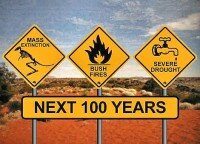
Climate change could soon trigger an early election in Australia.
read more »
Posted in Policy on 12/03/2009 02:36 am by
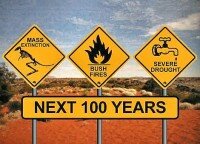
So climate change has claimed a political victim in Australia and you don’t know whether to laugh or cry…
read more »
Posted in Behaviour, Policy, Technology on 03/13/2009 05:30 pm by Stephen Tindale

Our website, Climateanswers.info, is broadly split up into three: technological answers, political answers and behavioural answers.
Why have we done this?
Well, this site is really about actions and not prohibitions – what we can do, rather than just what we shouldn’t. We do not wear hair shirts at Climate Answers and we are born optimists!
read more »
- Tags: 'cap-and-trade', biochar, carbon, carbon capture, electric cars, emission trading schemes, fiscal reform, nuclear power, organic food, solar power, wind power
Posted in Policy on 04/07/2014 04:44 pm by Stephen Tindale
My comments to the European Commission, saying that it should approve the UK government’s application to sign a contract with EDF energy to build a new nuclear power station.
read more »
Posted in Policy on 12/17/2009 12:07 pm by Stephen Tindale

Much has been talked about ‘carbon offsetting’ in recent years and it is now a well known expression. But what is it and is it desirable?
Well, it is easy to define in three distinct ways, but whether it is a good idea depends on what is actually meant.
read more »
Posted in Policy on 01/18/2010 06:55 pm by Stephen Tindale

How well have Obama and Energy Secretary Chu done so far on promoting energy efficiency, renewables, CCS and electric vehicles? A very positive assessment is made by the Center for American Progress.
read more »
Posted in Answers to your questions on 07/02/2010 08:23 am by Administrator

Question: Why don’t we introduce a fiscal-neutral carbon tax, like that proposed by Prof James Hansen?
Alessandro De Maida
read more »
Posted in Policy on 10/20/2009 10:15 am by Stephen Tindale

In 1992, the UN Framework Convention on Climate Change (UNFCC) was signed at the first World Summit on Sustainable Development, which was held in Rio de Janeiro. The Convention did not set targets, but provided the framework for negotiations about targets. These were agreed in the 1997 Kyoto Protocol.
read more »