Posted in Comment on 04/01/2010 02:49 pm by Stephen Tindale
This week, I have been to Poland to talk at a Demos Europa conference on CCS in that country. Poland has the ninth largest global coal reserves, but does not have significant oil or gas reserves. In 2006, 93% of its electricity came from coal and 91% of its heat, so 58.5% of total energy was from coal. Its economy is growing, despite the recession, and a significant number of existing coal stations will have to close over the next 15 years.
read more »
Posted in Comment on 03/01/2010 06:53 pm by Stephen Tindale
This morning, the Centre for European Reform (www.cer.org.uk) launched the report, which Simon Tilford and I have written, about what the EU should do about CCS. We argue that large-scale demonstration will require public money, and that widespread and rapid deployment will require regulation, ideally at European level.
read more »
Posted in Comment on 10/12/2009 12:27 pm by Stephen Tindale
Last Friday Eon, announced that it is postponing its plan to build a new power station in Kent that would have demonstrated that carbon capture and storage (CCS) technology can be retrofitted. The same day, the energy regulator, the Office of Gas and Electricity Markets (Ofgem), published a report accepting that energy prices would have to increase, but would increase much less under a move to low-carbon energy than under a scenario under which the UK relies on gas and oil. And today, the Committee on Climate Change launches its first report on how the UK is doing on meetings its carbon budgets – basic message: ‘not nearly well enough’.
read more »
Posted in Comment on 10/12/2010 02:07 pm by Stephen Tindale
The South African government has published an energy plan which proposes a decline in the use of coal and six new nuclear power stations. The country is not short of coal, so the government should be commended for exploring alternatives.
read more »
Posted in Comment on 04/13/2009 10:29 am by Stephen Tindale
The President of the Maldives, Mohamed Nasheed, is aiming to make his country the first 100% renewable economy (for electricity, heat and transport).
read more »
Posted in Comment on 08/13/2010 02:24 pm by Stephen Tindale
The US Congress broke up for the summer without any progress on climate or energy legislation. The chances of getting any legislative progress on cap-and-trade, which have been small for some time, now look miniscule. However, rather than giving up, the Obama administration has responded with three actions that are signs of serious commitment.
read more »
Posted in Comment on 12/13/2013 02:41 pm by Stephen Tindale
Friday the 13th – and reasons to be gloomy about UK energy policy
read more »
Posted in Comment on 08/14/2009 10:22 am by Stephen Tindale
To maintain its leading global position on climate change, the EU must speed up its funding of carbon capture and storage (CCS) demonstration projects. It is more important to show that very large amounts of low-carbon electricity can be generated than it is to debate endlessly about what international targets and timetables should be set.
read more »
Posted in Comment on 12/14/2010 05:47 pm by Stephen Tindale
The Cancun climate summit made some progress in three important areas: forests, funding and CCS. None of these was dramatic, but at least the direction was right.
read more »
Posted in Comment on 01/14/2010 04:42 pm by Stephen Tindale
Today, I attended a conference organised by Business for a New Europe and the Centre for European Reform on Is the EU good for business?. The general answers was (unsurprisingly, given the organisers) ‘yes, generally, but could be better’.
read more »
Posted in Comment on 07/14/2009 08:02 pm by Stephen Tindale
On Monday, 13 July 2009, Ed Miliband, the UK Energy and Climate Change Secretary, opened the Little Cheyne Court wind farm in Kent. With a capacity of just under 60Mw, this is the largest wind farm in South East England.
read more »
Posted in Comment on 05/14/2014 11:37 am by Stephen Tindale
Swiss paper Le Temps has now published (in French) my article on the need for a new narrative for European integration. Here is the English version.
read more »
Posted in Comment on 12/17/2010 02:08 pm by Stephen Tindale
UK Energy Secretary, Chris Huhne, has proposed a radical overhaul of the UK’s electricity market. This is good news, but the government must do more to combat fuel poverty.
read more »
Posted in Comment on 07/17/2009 07:33 pm by Stephen Tindale
On Wednesday 15 July 2009, the UK government published its plan to make the UK a low carbon economy. It is good on electricity, quite good on energy efficiency and heat, but bad on transport.
read more »
- Tags: carbon capture, carbon tax, CCS, CHP, climate change levy, coal power, decarbonisation, energy efficiency, fuel poverty, nuclear power, renewables, statistics, wind power
Posted in Comment on 02/18/2011 09:30 am by Stephen Tindale
There is already substantial debate – much of it heated – about the EU’s Budget from 2014 to 2020, the Multiannual Financial Framework. Money on agriculture should be reduced, while money on rural development and redistribution to poorer regions should be protected or increased. Spending on climate protection should be increased, and all spending should be ‘climate proofed’ to ensure it is not making things even worse.
read more »
Posted in Comment on 05/06/2015 10:08 pm by Suzanna Hinson
Analyses what the parties standing UK-wide are promising to do about climate change.
read more »
Posted in Comment on 10/22/2010 08:52 am by Stephen Tindale
The UK government has cut spending on climate schemes less than it has cut most other schemes. But is has cut local government grants by more than a quarter, so local government must play a greater role on energy efficiency schemes. In addition, the government should have made winter fuel payments means-tested.
read more »
Posted in Comment on 06/23/2009 08:46 am by Stephen Tindale
Burning coal is an extremely damaging way to generate electricity. Coal has a very high carbon content, so is a major source of greenhouse gasses. Burning it also results in pollutants that are directly damaging to human health, such as sulphur dioxide.
read more »
Posted in Comment, Policy on 02/24/2014 08:05 am by Stephen Tindale
The Conservative Party is planning new subsidies for coal power stations. This is a striking historic reversal, because the Tories have traditionally been anti-coal.
read more »
Posted in Comment on 03/24/2011 04:46 pm by Stephen Tindale
Yesterday’s UK Budget wasn’t that bad for climate protection, although it wasn’t nearly as good as it should have been. Announcements on energy and the promised Green Investment Bank were quite good, but those on transport were awful.
read more »
Posted in Comment on 04/26/2010 03:48 pm by Stephen Tindale
This morning I attended an event called ‘Ask a Climate Question’ organised by a coalition of environment and development groups. The most striking aspect of the discussion was that, with the exception of nuclear power, there was broad consensus among the four parties.
read more »
Posted in Comment on 01/26/2010 12:24 pm by Stephen Tindale
Yesterday, I attended a talk by Pat McFadden, a minister in the UK’s Business Department, about how the UK should move to a low-carbon economy. His main point was that the UK is still a manufacturing economy, despite the common view that everything manufactured is now imported. He also talked about the enormous opportunity for people in the UK to make wind turbines.
read more »
Posted in Comment on 05/26/2009 12:10 pm by Stephen Tindale
China now emits 18% of total global greenhouse gases. This is the same as the USA – possibly more. So, it is obviously essential to engage the Chinese people, government and businesses over climate control. But this doesn’t mean that China and the US (or Europe) are equally ‘responsible’.
read more »
Posted in Comment on 10/26/2014 09:47 am by Stephen Tindale
My article for ‘Responding to Climate Change’ on European governments’ acceptance of Commission proposals for a 2030 climate and energy package.
read more »
Posted in Comment on 05/28/2009 07:29 pm by Stephen Tindale
The UK has reduced total greenhouse gas emissions since 1990 by 15%. However, this has not primarily been achieved by government policies introduced to protect the climate.
read more »
Posted in Comment on 10/28/2011 11:25 am by Stephen Tindale
The failure of the UK’s first CCS competition was because the then (Labour) government restricted it to post-combustion on the grounds that this could be retrofitted, then allowed proposals for new power stations to join the competition, and took far too long making decisions. The current coalition government can learn from these mistakes, and says it remains committed to CCS.
read more »
Posted in Comment on 12/03/2013 11:57 am by Stephen Tindale
UK energy policy is in utter confusion, but is EU policy any better?
read more »
Posted in Comment on 09/29/2009 04:50 pm by Stephen Tindale
Angela Merkel’s victory in Germany’s election was not unexpected. What was less clear was who her coalition partner would be, but we now know that it will be the FDP. This party is liberal, in both economic and social senses. It is also very pro-business and in favour of tax cuts and is now arguing for reductions in subsidies.
read more »
Posted in Comment on 12/03/2009 09:53 am by Stephen Tindale
Yesterday I went to Brussels for a seminar on CCS with Ruud Lubbers, who used to be prime minister of the Netherlands and is now running the Rotterdam Climate Initiative.
read more »
Posted in Comment on 02/04/2010 01:00 pm by Stephen Tindale
On Tuesday 2 February 2010, European Union member states agreed to European Commission proposals on how to distribute billions of Euros collected under the Emissions Trading Scheme (ETS) to CCS and renewable energy projects.
read more »
Posted in Comment on 11/05/2010 08:17 am by Stephen Tindale
Courts have put injunctions on the Spanish government’s plans to subsidise Spanish coal. This is welcome. Subsidies should go to coal with CCS, and to renewables.
read more »
Posted in Comment, Policy on 12/07/2015 09:30 am by Stephen Tindale
The advance represented by Energy and Climate Secretary Amber Rudd’s ‘reset’ speech on 18 November has been pretty comprehensively destroyed by Chancellor George Osborne.
read more »
Posted in Comment on 10/08/2009 10:43 am by Stephen Tindale
The US budget deficit has more than tripled to a record $1.4trn (£877bn, €948bn) in the year to 30 September 2009, due to increased government spending and a big drop in tax revenues. So, how is the US going to pay for a transition to a low-carbon economy?
read more »
Posted in Comment on 03/09/2011 03:27 pm by Stephen Tindale
The European Commission published its Energy Efficiency Plan yesterday. It isn’t bad, and calls for combined heat and power to be made mandatory in some cases. The plan should be implemented without delay.
read more »
Posted in Technology on 06/23/2009 08:26 am by Stephen Tindale
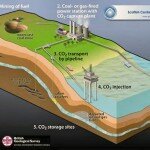
Coal has a very high carbon content, so is a major source of greenhouse gasses and the economic costs of polluting the atmosphere are not borne by the polluter, In economic jargon, ‘the externalities are not internalised’.
read more »
Posted in Policy on 02/23/2011 04:58 pm by Stephen Tindale
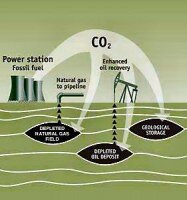
The EU has made some progress on large scale CCS demonstration projects, but needs to speed up.
read more »
Posted in Policy, Technology on 03/01/2010 01:16 pm by

Coal will be the biggest single source of electricity for decades to come. Yet the EU is doing far too little to encourage the take-up of carbon capture and storage, a technology which could make coal a low-carbon fuel. This failure threatens not only Europe’s leadership of global climate change policy but also its ability to profit from the emergence of a huge global market for equipment and expertise. Stephen Tindale and Simon Tilford argue that more public money is needed for the construction of demonstration projects, while regulation and strong market signals will be required to ensure mass deployment of the technology.
read more »
Posted in Policy, Technology on 03/01/2010 01:15 pm by

Coal will be the biggest single source of electricity for decades to come. Yet the EU is doing far too little to encourage the take-up of carbon capture and storage, a technology which could make coal a low-carbon fuel. This failure threatens not only Europe’s leadership of global climate change policy but also its ability to profit from the emergence of a huge global market for equipment and expertise. Stephen Tindale and Simon Tilford argue that more public money is needed for the construction of demonstration projects, while regulation and strong market signals will be required to ensure mass deployment of the technology.
read more »
Posted in Comment, Policy on 04/22/2015 03:41 pm by Suzanna Hinson
The EU should not buy electricity from countries with highly-polluting coal power stations, and should instead support efficiency and clean energy in these countries.
read more »
- Tags: biomass, carbon capture, CCS, CHP, coal power, decarbonisation, energy efficiency, nuclear power, renewables, solar power, wind power
Posted in Behaviour, Policy, Technology on 03/13/2009 05:30 pm by Stephen Tindale

Our website, Climateanswers.info, is broadly split up into three: technological answers, political answers and behavioural answers.
Why have we done this?
Well, this site is really about actions and not prohibitions – what we can do, rather than just what we shouldn’t. We do not wear hair shirts at Climate Answers and we are born optimists!
read more »
- Tags: 'cap-and-trade', biochar, carbon, carbon capture, electric cars, emission trading schemes, fiscal reform, nuclear power, organic food, solar power, wind power
Posted in Policy on 04/07/2014 04:44 pm by Stephen Tindale
My comments to the European Commission, saying that it should approve the UK government’s application to sign a contract with EDF energy to build a new nuclear power station.
read more »
Posted in Policy on 04/17/2010 05:53 pm by Stephen Tindale

All three main UK parties take climate seriously and promise to reduce emissions and expand low-carbon energy. They all recognise the energy security and employment benefits. This article includes quotations from the relevant parts of the manifestos of the three main parties on heat and electricity – energy efficiency, fuel poverty and energy production.
read more »
Posted in Policy, Technology on 10/12/2009 11:55 am by Stephen Tindale

Rapid and extensive demonstration of carbon capture and storage (CCS) is necessary to show that it works as well at larger scales as it does at smaller scales, and that it works throughout the generation, capture, transport and storage process.
read more »
Posted in Policy on 01/18/2010 06:55 pm by Stephen Tindale

How well have Obama and Energy Secretary Chu done so far on promoting energy efficiency, renewables, CCS and electric vehicles? A very positive assessment is made by the Center for American Progress.
read more »
Posted in Repowering communities on 08/06/2010 01:25 pm by Stephen Tindale

Rotterdam is now Europe’s largest port. It has a concentration of heavy industry, including oil refineries and power stations. So its contribution to climate emissions is substantial.
read more »
Posted in Comment, Policy, Technology on 01/25/2017 09:47 am by Stephen Tindale
The low-carbon energy sectors – efficiency, most renewables, CCS and nuclear – should work together more strategically
read more »
- Tags: biomass, carbon capture, CCS, CHP, decarbonisation, energy efficiency, nuclear power, renewables, solar power, solar thermal, tidal power, wind power
Posted in Policy on 05/08/2014 09:29 am by Stephen Tindale

For climate and air quality reasons, we need more gas. Shale gas is less bad than liquified natural gas – and better than coal.
read more »
Posted in Comment, Policy on 06/27/2016 08:02 am by Stephen Tindale
What will be the impact of Brexit on clean energy in the UK? Answer: nobody knows, because nothing is remotely clear in British politics now. Who will be prime minister? Will there be an early general election? What will be the relationship between the UK and the remaining EU member-states? Will there even be a […]
read more »
Posted in Policy, Repowering communities on 07/15/2011 09:00 am by Stephen Tindale

This is a summary and analysis of UK’s white paper on Electricity Market Reform and Renewables Roadmap, published this week.
read more »
Posted in Policy, Technology on 11/13/2009 10:49 am by Stephen Tindale

Yesterday (9 November 2008), the UK Energy and Climate Change Secretary, Ed Miliband, published National Policy Statements (NPS) outlining the government policy on energy. They consist of guidance to the new Infrastructure Planning Commission (IPC), which, from next March, is due to grant or refuse planning permission on major energy and transport infrastructure projects. The statements are area a mixed bag – good on renewables, nuclear and electricity networks, but less good on coal.
read more »
Posted in Comment on 05/11/2015 08:31 am by Stephen Tindale
Tory manifesto indicates no major change in energy policy, with exception of end to subsidy for onshore wind. But UK engagement with EU energy union looking less likely.
read more »