Posted in Books on 01/08/2010 02:13 pm by Stephen Tindale
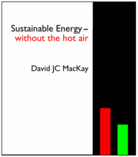
Anyone who cares about the survival of human civilisation should read this book. It is packed with facts and statistics about solutions, and shows that we must stop arguing about which is cheapest or best, because we need all of them.
read more »
Posted in Comment on 02/01/2010 09:54 am by Stephen Tindale
Last week, I went to Chile to take part in a conference about energy policy – mainly about whether Chile should build nuclear power stations. The current Chilean government has been discussing nuclear energy for the last three years, but has not said yes or no.
read more »
Posted in Comment on 11/01/2011 11:54 am by
Comment by Tarquin Henderson of the ReEnergise Group on the UK government’s changes to Feed-in Tariff rates for solar photovoltaics.
read more »
Posted in Comment, Repowering communities on 08/10/2010 10:57 am by Stephen Tindale
The UK Energy and Climate Secretary has announced that, from 18 August 2010, local councils will be allowed to sell renewable electricity. This is fast and impressive work.
read more »
Posted in Comment on 11/10/2011 05:01 pm by
Robert Webb comments on the strengths and weaknesses of the ‘Energy Internet’ vision.
read more »
Posted in Comment on 08/11/2009 11:03 am by Stephen Tindale
Brazilian president, Lula da Silva, says (quite often) that “Brazil is in charge of looking after the Amazon” and, to be fair, his government has tried to reduce the rate of destruction. However, being in charge doesn’t mean paying the bill.
read more »
Posted in Comment on 06/11/2009 04:05 pm by Stephen Tindale
The need to reduce greenhouse gas emissions is usually referred to as ‘decarbonisation’. Jonathan Porritt, the chairman of the UK Sustainable Development Commission, thinks that it is better to call it “re-solarisation”, because this is positive and solar power has immense potential.
read more »
Posted in Comment on 05/11/2009 11:33 am by Stephen Tindale
Last week, I went to Rome to talk to Chicco Testa, who used to be chairman of Enel, Italy’s largest energy utility (and the third largest in Europe). He has now set up an organisation called NewClear to press Italy and other European countries to build new nuclear power stations.
read more »
Posted in Climate Answers' projects, Comment on 03/12/2010 11:28 am by Stephen Tindale
This week, another dispute has broken out between environmentalists in the UK, this time primarily between journalist and author, George Monbiot, and the head of the company, Solar Century, Jeremy Leggett, over whether it is sensible to offer householders in the UK large subsidies to install solar photovoltaic (PV) panels.
read more »
Posted in Comment on 10/12/2010 02:07 pm by Stephen Tindale
The South African government has published an energy plan which proposes a decline in the use of coal and six new nuclear power stations. The country is not short of coal, so the government should be commended for exploring alternatives.
read more »
Posted in Comment on 04/13/2009 10:29 am by Stephen Tindale
The President of the Maldives, Mohamed Nasheed, is aiming to make his country the first 100% renewable economy (for electricity, heat and transport).
read more »
Posted in Comment on 07/15/2016 09:01 am by Stephen Tindale
The UK no longer has a department with the words ‘climate change’ in its title. Climate policy is now the responsibility of a new Department of Business, Energy and Industrial Strategy. This could be seen as a downgrading of climate action – and has been condemned by some green groups. But I think it is […]
read more »
Posted in Climate Answers' projects, Comment on 10/15/2009 11:18 am by Stephen Tindale
“Think global; act local” – the phrase often used by of Friends of the Earth – is an excellent philosophy. Since most of us do not have the power to influence international events, we should focus more on taking practical steps in our own localities. Climate change is the ultimate global issue and it does not matter where greenhouse gases are emitted. So global thinking is needed. However, practical measures are more important than yet more thought and discussion or international targets. Copenhagen is important, but must not be the only focus at the moment.
read more »
Posted in Comment on 01/16/2012 12:41 pm by Stephen Tindale
Global investment in renewables and energy efficiency increased 5% to $260 billion in 2011, according to Bloomberg New Energy Finance.
read more »
Posted in Comment on 11/17/2009 08:27 am by Stephen Tindale
Presidents Hu and Obama met today in Beijing and climate change was high on the agenda. China and the US are now the two largest producers of greenhouse gas emissions, responsible for over a third of total annual global emissions – though the US has caused 30% of the total historical contribution, whereas China has contributed just 7%, and US per capita emissions are 23.5 tons, whereas China’s are 5.5 tons.
read more »
Posted in Comment on 04/18/2010 03:04 pm by Stephen Tindale
The manifestos of the three main UK political parties, Conservative, Labour and Liberal Democrat, all agree that climate change is an extremely serious issue and that tackling it can be done in ways which enhance energy security and strengthen the UK economy.
read more »
Posted in Comment on 06/18/2009 09:36 am by Stephen Tindale
Today, EU national governments are meeting to discuss who should be the next President of the Commission. The current president, Jose Manuel Barroso, wants a second term and will probably be given it. This would be good for the climate.
read more »
Posted in Comment on 05/18/2009 04:39 pm by Stephen Tindale
The Congress Party has won India’s general election, so will be in power for a further five years – and it looks like its position will more be more secure than during the previous five. This is significant because, arguably, it is crucial for India to now have a strong government as it is impossible to understate India’s importance as far as climate change is concerned.
read more »
Posted in Comment on 09/02/2010 03:46 pm by Stephen Tindale
I have just returned from a trip to Slovenia. On Monday, I chaired a session on the transition to new energy at the Bled Strategic Forum, an annual event which brings together politicians, business people, NGOS and journalists. This year, the forum was about the global challenges of the next decade, so there was a lot of discussion about climate change.
read more »
Posted in Comment on 04/20/2010 06:51 pm by Stephen Tindale
The Saudi Arabian government has announced that it will pursue nuclear and renewable electricity to meet the country’s rising demand for energy, driven by a rapidly expanding population and industrial base, and a growing need for desalinated water. It is not unusual for a government to announce support for nuclear or renewables, but it is quite striking for the country with the world’s largest known oil reserves, and the fifth largest gas reserves, to be planning to develop alternatives to fossil fuels.
read more »
Posted in Comment on 11/20/2009 11:22 am by Stephen Tindale
This week, I have been to Brussels for meetings on energy efficiency, renewables, nuclear and CCS. The now-ratified Lisbon Treaty says that there will, in the future, be a common energy policy, but this is unlikely to have much practical impact, but the EU has achieved much in important areas.
read more »
Posted in Comment, Policy on 06/24/2015 09:03 am by Stephen Tindale
Key quotes from, and a few of my comments on, the excellent Lancet Commission report
read more »
- Tags: 'cap-and-trade', carbon tax, CCS, coal power, decarbonisation, energy efficiency, EU, nuclear power, Public health, renewables, solar power, wind power
Posted in Comment on 08/21/2009 06:10 pm by Stephen Tindale
Spain and South Africa both have lots of coal, but no significant oil or gas. Yet their responses to the energy security issues this raises have been dramatically different.
read more »
Posted in Comment on 01/24/2011 02:28 pm by Stephen Tindale
A Greek utility is planning to build a 200Mw solar photovoltaic farm. This is welcome news, though only a faltering first step.
read more »
Posted in Comment on 05/26/2009 12:10 pm by Stephen Tindale
China now emits 18% of total global greenhouse gases. This is the same as the USA – possibly more. So, it is obviously essential to engage the Chinese people, government and businesses over climate control. But this doesn’t mean that China and the US (or Europe) are equally ‘responsible’.
read more »
Posted in Comment on 10/27/2015 07:49 am by Jon Trevelyan

A post by Melody Waterworth on energy in Ghana, where she is currently volunteering.
read more »
Posted in Comment, Repowering communities on 06/28/2011 12:57 pm by Stephen Tindale
This is a commentary on the UK government’s new microgeneration strategy. It is good that it recognises the need to address non-financial barriers, but lack of strong regulatory framework will not deliver microgeneration or climate protection.
read more »
Posted in Comment, Repowering communities on 10/28/2010 11:19 am by Stephen Tindale
This week, I was taken on a tour of properties owned by Islington Council. Islington is an area of London with many council home. The borough council was run by the Liberal Democrats until May 2010. However, in the local elections, it reverted to Labour control – it has been run by Labour for most of the last few decades. The Liberal Democrat leader, Terry Stacy, was personally very committed to action on climate and fuel poverty, and the new Labour leader, Catherine West, appears to be the same.
read more »
Posted in Comment on 04/30/2009 12:00 am by Stephen Tindale
Last week, the South African general election took place. The Indian general election has also begun, although it lasts a month, so the results will not be known until mid May. However, it is clear that both countries must begin controlling carbon emissions and can do so in ways that will also reduce poverty.
read more »
Posted in Comment on 03/05/2010 03:03 pm by Stephen Tindale
On Wednesday and Thursday, I attended a conference on renewable energy in Scotland, on the stunningly beautiful island Skye. I talked about how to dispel myths about climate change and renewables.
read more »
Posted in Comment on 05/05/2010 02:21 pm by Stephen Tindale
This week, I attended a conference in Brussels organised by the King Baudouin Foundation. It was about how to control climate change while also increasing social justice. Therefore, the issue of making existing homes more energy efficient was central to the discussion.
read more »
Posted in Comment on 11/05/2010 08:17 am by Stephen Tindale
Courts have put injunctions on the Spanish government’s plans to subsidise Spanish coal. This is welcome. Subsidies should go to coal with CCS, and to renewables.
read more »
Posted in Comment on 08/07/2009 12:39 pm by Stephen Tindale
The Indian government has published an extremely ambitious plan to install 20GW of solar technology by 2020 – for both electricity generation and water heating. The International Energy Agency predicts that the total global solar capacity will be 27Gw in 2020, so this would mean that India had 75% of the total.
read more »
Posted in Comment on 12/07/2009 02:54 pm by Stephen Tindale
The Copenhagen Climate Summit starts today. Prospects are looking better than they were a few weeks ago and the fact that President Obama has decided to attend the final negotiating session, rather than just for a token visit at the start, is excellent.
read more »
Posted in Comment on 07/07/2009 12:28 pm by Stephen Tindale
The International Climate Challenge brings together young people from around the world for online discussions and exchanges of information about how to control climate change. There are also actual meetings and, last week, I attended one in London.
read more »
Posted in Comment on 05/07/2009 12:13 pm by Stephen Tindale
President Obama’s meeting with the Pakistani President Asif Ali Zardari on 6 May understandably focussed on how to combat the Taliban and control Pakistan’s nuclear weapons.
read more »
Posted in Comment on 09/07/2009 04:56 pm by Stephen Tindale
One of Kevin Rudd’s first acts on becoming Australian prime minister was to ratify the Kyoto Protocol, which his predecessor refused to do. Now, he is trying to introduce a cap-and-trade system to help deliver up to a 25% reduction in Australia’s emissions by 2020. This isn’t enough, but it is certainly better than denying the reality of climate change, as many of his opponents still do.
read more »
Posted in Comment on 10/08/2010 08:55 am by Stephen Tindale
It isn’t often worth commenting on the fact that an agreement has been signed. Too many politicians make too many promises about what they plan to do in the future. However, a co-operation agreement between the US, the world’s top polluter, and Iceland, the world leader on geothermal energy use, is an exception.
read more »
Posted in Comment on 04/09/2010 08:52 am by Stephen Tindale
We try to be optimistic and positive at Climate Answers; to emphasise what we support rather than what we oppose. However, that doesn’t mean that there aren’t things to oppose and condemn, and yesterday’s decision by the World Bank to give a $3.75 billion loan for a coal power station in South Africa is certainly one of them.
read more »
Posted in Comment on 07/09/2009 04:53 pm by Stephen Tindale
Yesterday, the G8 countries promised to cut their greenhouse emissions by 80% by 2050, and to limit global warming to no more than two degrees centigrade. This is better than nothing but less than is needed.
read more »
Posted in Policy on 09/07/2009 04:39 pm by

Climate change could soon trigger an early election in Australia.
read more »
Posted in Comment, Policy on 04/22/2015 03:41 pm by Suzanna Hinson
The EU should not buy electricity from countries with highly-polluting coal power stations, and should instead support efficiency and clean energy in these countries.
read more »
- Tags: biomass, carbon capture, CCS, CHP, coal power, decarbonisation, energy efficiency, nuclear power, renewables, solar power, wind power
Posted in Behaviour, Policy, Technology on 03/13/2009 05:30 pm by Stephen Tindale

Our website, Climateanswers.info, is broadly split up into three: technological answers, political answers and behavioural answers.
Why have we done this?
Well, this site is really about actions and not prohibitions – what we can do, rather than just what we shouldn’t. We do not wear hair shirts at Climate Answers and we are born optimists!
read more »
- Tags: 'cap-and-trade', biochar, carbon, carbon capture, electric cars, emission trading schemes, fiscal reform, nuclear power, organic food, solar power, wind power
Posted in Policy on 01/04/2010 02:25 pm by Stephen Tindale

Germany led the world on wind energy until 2007. In 2008, it was overtaken in terms of total installed capacity, though not percentage of energy coming from wind, by the USA. It remains the world’s top photovoltaic (PV) installer, accounting for almost half of the global market in 2007 – though this generates only about 1% of total electricity used in Germany.
read more »
Posted in Technology on 12/09/2009 09:48 am by Stephen Tindale
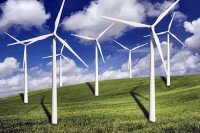
No form of electricity generation is entirely free of carbon emissions. So just how carbon free are the main types?
read more »
Posted in Comment, Policy on 03/28/2015 07:30 pm by Stephen Tindale
Climate campaigners should be more pragmatic and more prepared to make compromises. Pragmatism often delivers progress; idealism rarely does.
read more »
Posted in Policy, Technology on 03/12/2010 11:26 am by
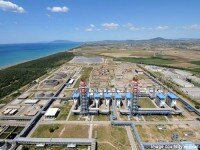
As a result of its energy efficiency indicators and the expansion of its renewable programme, Italy has the capacity to lead worldwide production of renewable energy and set standards for an efficient model.
read more »
Posted in Policy on 06/02/2010 11:04 am by
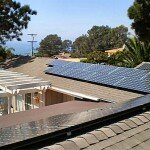
What is a pace? The length of a stride? The speed of activity? The pace that is attracting the most attention in the US in 2010 is Property-Assessed Clean Energy. Like many US trends and fads, it is worth understanding for its possible influence outside beyond North America.
read more »
Posted in Climate Answers' projects on 06/10/2009 12:37 pm by Stephen Tindale

Climate Answers is involved in a project to reduce energy use, improve comfort levels and so improve education at a school in Islington, London.
read more »
Posted in Policy, Technology on 03/05/2010 03:01 pm by Stephen Tindale

There are several myths or misunderstandings that have grown up surrounding climate change and renewable energy. Both sides of the debate can be at fault. This article tries to debunk some of nonsense that is often cited as fact.
read more »
Posted in Repowering communities on 12/07/2011 04:12 pm by
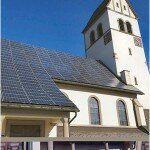
Three months after the Fukashima nuclear reactor caught fire, Germany decided to phase out nuclear power. The decision stunned Europe’s energy policy community. Nuclear presently provides a quarter of Germany’s electricity – how would it plug the gap?
read more »
Posted in Comment, Policy, Technology on 10/23/2015 08:57 am by Stephen Tindale
The Committee on Climate Change sensibly calls for an ‘all of the above’ approach to decarbonisation.
read more »
- Tags: air quality, biofuel, biogas, biomass, CCS, decarbonisation, electric cars, energy efficiency, EU, nuclear power, renewables, solar power, tidal power, wave power, wind power
Posted in Comment on 03/26/2015 06:39 am by Stephen Tindale

A small island in Rio bay already gets most of its energy from renewables. It should move to become totally powered by solar, biogas and imported hydroelectricity.
read more »
Posted in Policy on 01/18/2010 06:55 pm by Stephen Tindale

How well have Obama and Energy Secretary Chu done so far on promoting energy efficiency, renewables, CCS and electric vehicles? A very positive assessment is made by the Center for American Progress.
read more »
Posted in Policy on 11/16/2009 04:58 pm by Stephen Tindale
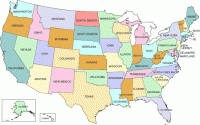
This article reviews the climate performance of different US states and is mainly based on Climate Change 101: state action published by the Pew Centre on Global Climate Change and on State of the States 2008: Renewable Energy Development and the Role of Policy published by the US Department of Energy’s Renewable Energy Laboratory.
read more »
Posted in Repowering communities on 06/21/2010 10:09 am by Stephen Tindale

I am writing a book, with Prashant Vaze and Peter Meyer on the role that local, regional and state governments should play in increasing energy efficiency and promoting low carbon energy. This will be published by Earthscan in 2011.
read more »
Posted in Repowering communities on 08/28/2010 03:12 pm by Stephen Tindale

Freiburg has a well-deserved reputation as Germany’s green capital. It uses on about half of the energy that other European cities of 200,000 people do, and has become a world leader in solar. This article looks at what the city council has done to achieve this.
read more »
Posted in Repowering communities on 07/29/2010 03:08 pm by

Lessons from California on what to do – and what not to do.
read more »
Posted in Climate Answers' projects on 02/23/2011 02:04 pm by

This is the report, by the head teacher of Gillespie School in the UK, of his visit to a school in Niger. Climate Answers has paid for solar lighting at this school.
read more »
Posted in Policy, Technology on 04/30/2009 12:00 am by Stephen Tindale
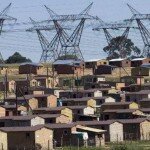
The ANC government has connected 80% of all South Africans to the electricity grid – one of its greatest successes. However, this mass electrification programme, combined with strong economic growth and rapid industrialisation, meant that demand for power outstripped supply in early 2008.
read more »
Posted in Policy on 08/21/2009 06:06 pm by Stephen Tindale
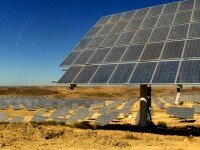
Spain is a strong example of how government can shape the energy system in progressive ways.
read more »
Posted in Comment, Policy, Technology on 01/25/2017 09:47 am by Stephen Tindale
The low-carbon energy sectors – efficiency, most renewables, CCS and nuclear – should work together more strategically
read more »
- Tags: biomass, carbon capture, CCS, CHP, decarbonisation, energy efficiency, nuclear power, renewables, solar power, solar thermal, tidal power, wind power
Posted in Policy, Technology on 05/14/2009 11:57 am by Stephen Tindale
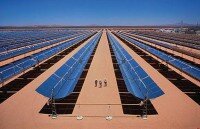
Israel is a world leader in solar energy. About three quarters of all households use the sun to heat water, using a technology called solar thermal. And Israeli firms are widely recognised as technological leaders in the field of solar electricity.
read more »
Posted in Technology on 06/07/2010 08:56 am by

Even if silicon is actually the industry common semiconductor in most electrical units, which includes the cells that photo voltaic (PV) panels utilise to convert sunshine into energy, it is hardly the most cost-efficient product on the market.
read more »