Posted in Comment on 04/01/2010 02:49 pm by Stephen Tindale
This week, I have been to Poland to talk at a Demos Europa conference on CCS in that country. Poland has the ninth largest global coal reserves, but does not have significant oil or gas reserves. In 2006, 93% of its electricity came from coal and 91% of its heat, so 58.5% of total energy was from coal. Its economy is growing, despite the recession, and a significant number of existing coal stations will have to close over the next 15 years.
read more »
Posted in Comment on 02/01/2010 09:54 am by Stephen Tindale
Last week, I went to Chile to take part in a conference about energy policy – mainly about whether Chile should build nuclear power stations. The current Chilean government has been discussing nuclear energy for the last three years, but has not said yes or no.
read more »
Posted in Comment on 05/10/2010 10:07 am by Stephen Tindale
The world faces an urgent climate crisis. There is no time to lose. However, the UK general election has produced no winner and, at the time of writing, it is still not clear who will form the next government.
read more »
Posted in Comment on 11/11/2010 01:41 pm by Stephen Tindale
The Commission’s proposal for a new energy strategy is disappointing – it lacks specific policy proposals.
read more »
Posted in Comment on 10/12/2010 02:07 pm by Stephen Tindale
The South African government has published an energy plan which proposes a decline in the use of coal and six new nuclear power stations. The country is not short of coal, so the government should be commended for exploring alternatives.
read more »
Posted in Comment on 12/13/2013 02:41 pm by Stephen Tindale
Friday the 13th – and reasons to be gloomy about UK energy policy
read more »
Posted in Comment on 05/13/2010 10:23 am by Stephen Tindale
The UK has a new government and the prospects for climate policy are mixed. The promised policies on aviation and coal are stronger than those of the former Labour government. The approach to renewables is similar to that of Labour. However, the approach on nuclear power looks like a recipe for muddle and delay.
read more »
Posted in Comment on 12/14/2010 05:47 pm by Stephen Tindale
The Cancun climate summit made some progress in three important areas: forests, funding and CCS. None of these was dramatic, but at least the direction was right.
read more »
Posted in Comment on 12/17/2010 02:08 pm by Stephen Tindale
UK Energy Secretary, Chris Huhne, has proposed a radical overhaul of the UK’s electricity market. This is good news, but the government must do more to combat fuel poverty.
read more »
Posted in Comment on 07/17/2009 07:33 pm by Stephen Tindale
On Wednesday 15 July 2009, the UK government published its plan to make the UK a low carbon economy. It is good on electricity, quite good on energy efficiency and heat, but bad on transport.
read more »
- Tags: carbon capture, carbon tax, CCS, CHP, climate change levy, coal power, decarbonisation, energy efficiency, fuel poverty, nuclear power, renewables, statistics, wind power
Posted in Comment on 11/17/2009 08:27 am by Stephen Tindale
Presidents Hu and Obama met today in Beijing and climate change was high on the agenda. China and the US are now the two largest producers of greenhouse gas emissions, responsible for over a third of total annual global emissions – though the US has caused 30% of the total historical contribution, whereas China has contributed just 7%, and US per capita emissions are 23.5 tons, whereas China’s are 5.5 tons.
read more »
Posted in Comment on 11/18/2010 07:25 am by Stephen Tindale
The Cancun climate summit should focus on how to get investment into low-carbon energy, rather than on legally-binding targets (which won’t be agreed anyway). The EU can take a lead here, as former Swedish Finance Minister Allan Larsson is arguing.
read more »
Posted in Comment, Policy on 11/19/2015 09:57 am by Stephen Tindale
UK climate and energy policy are not perfect, but are in significantly better shape this morning than they were yesterday morning
read more »
Posted in Comment on 09/02/2010 03:46 pm by Stephen Tindale
I have just returned from a trip to Slovenia. On Monday, I chaired a session on the transition to new energy at the Bled Strategic Forum, an annual event which brings together politicians, business people, NGOS and journalists. This year, the forum was about the global challenges of the next decade, so there was a lot of discussion about climate change.
read more »
Posted in Comment on 05/06/2015 10:08 pm by Suzanna Hinson
Analyses what the parties standing UK-wide are promising to do about climate change.
read more »
Posted in Comment, Policy on 06/24/2015 09:03 am by Stephen Tindale
Key quotes from, and a few of my comments on, the excellent Lancet Commission report
read more »
- Tags: 'cap-and-trade', carbon tax, CCS, coal power, decarbonisation, energy efficiency, EU, nuclear power, Public health, renewables, solar power, wind power
Posted in Comment on 02/22/2010 09:43 am by Stephen Tindale
Later this week, a new Ukrainian President, Viktor Yanukovych, will be inaugurated. The word “Ukraine” means borderland and, to most outsiders, that is exactly how the country is regarded: the place between the EU and Russia or the place through which Russian gas travels to the EU – unless the Russians turn off the taps, as they did in 2006 and 2009. However, it is more important than that, and not only to Ukrainians.
read more »
Posted in Comment on 10/22/2010 08:52 am by Stephen Tindale
The UK government has cut spending on climate schemes less than it has cut most other schemes. But is has cut local government grants by more than a quarter, so local government must play a greater role on energy efficiency schemes. In addition, the government should have made winter fuel payments means-tested.
read more »
Posted in Comment on 06/23/2009 08:46 am by Stephen Tindale
Burning coal is an extremely damaging way to generate electricity. Coal has a very high carbon content, so is a major source of greenhouse gasses. Burning it also results in pollutants that are directly damaging to human health, such as sulphur dioxide.
read more »
Posted in Comment on 02/24/2011 07:34 am by Stephen Tindale
The European Investment Bank increased its lending to projects to help control climate change to €19bn in 2010. This was a 19% increase over the 2009 figure and meant that climate projects accounted for almost a third of total EIB lending.
read more »
Posted in Comment, Policy on 02/24/2014 08:05 am by Stephen Tindale
The Conservative Party is planning new subsidies for coal power stations. This is a striking historic reversal, because the Tories have traditionally been anti-coal.
read more »
Posted in Comment on 01/24/2011 02:28 pm by Stephen Tindale
A Greek utility is planning to build a 200Mw solar photovoltaic farm. This is welcome news, though only a faltering first step.
read more »
Posted in Comment on 04/26/2012 12:41 pm by Stephen Tindale
Germany is planning several new coal and gas power stations – without CCS – to replace its nuclear stations. This is bad for the climate and also a waste of money.
read more »
Posted in Comment on 10/26/2014 09:47 am by Stephen Tindale
My article for ‘Responding to Climate Change’ on European governments’ acceptance of Commission proposals for a 2030 climate and energy package.
read more »
Posted in Comment on 02/28/2011 04:59 pm by Stephen Tindale
By the end of 2010, China had 41.8Gw of wind capacity installed. This grew by an impressive 62% in 2010.
read more »
Posted in Comment on 10/28/2011 11:25 am by Stephen Tindale
The failure of the UK’s first CCS competition was because the then (Labour) government restricted it to post-combustion on the grounds that this could be retrofitted, then allowed proposals for new power stations to join the competition, and took far too long making decisions. The current coalition government can learn from these mistakes, and says it remains committed to CCS.
read more »
Posted in Comment on 12/03/2013 11:57 am by Stephen Tindale
UK energy policy is in utter confusion, but is EU policy any better?
read more »
Posted in Comment on 09/29/2009 04:50 pm by Stephen Tindale
Angela Merkel’s victory in Germany’s election was not unexpected. What was less clear was who her coalition partner would be, but we now know that it will be the FDP. This party is liberal, in both economic and social senses. It is also very pro-business and in favour of tax cuts and is now arguing for reductions in subsidies.
read more »
Posted in Comment on 01/03/2011 03:46 pm by Stephen Tindale
The US Environmental Protection Agency is now regulating greenhouse gas emissions from power stations, oil refineries, cement productions facilities and other major sources of pollution. These are responsible for around 40% of total US emissions. However, Congress could still put an end to this programme.
read more »
Posted in Comment on 04/30/2009 12:00 am by Stephen Tindale
Last week, the South African general election took place. The Indian general election has also begun, although it lasts a month, so the results will not be known until mid May. However, it is clear that both countries must begin controlling carbon emissions and can do so in ways that will also reduce poverty.
read more »
Posted in Comment on 07/31/2010 07:05 am by Stephen Tindale
The European Commission has done well in securing some – though not nearly enough – money to support renewables and CCS from the European economic recovery plan and from auctioning permits under the EU’s emissions trading scheme. By comparison, EU countries paid out €3 billion in national coal subsidies in 2008 alone. All OECD countries together give $400 billion every year in subsidies to fossil fuels, compared with $45 billion to nuclear and $27 billion to renewables, according to the International Energy Agency.
read more »
Posted in Comment on 11/05/2010 08:17 am by Stephen Tindale
Courts have put injunctions on the Spanish government’s plans to subsidise Spanish coal. This is welcome. Subsidies should go to coal with CCS, and to renewables.
read more »
Posted in Comment on 04/06/2010 09:31 am by Stephen Tindale
Today, the general election campaign will almost certainly begin formally, though, in practice, it has been well underway all year.
read more »
Posted in Comment on 01/07/2014 01:55 pm by Stephen Tindale
The German “Energiewende” is not doing as well as often claimed; but climate protection is too important for point-scoring or schadenfreude.
read more »
Posted in Comment on 06/07/2010 11:28 am by Stephen Tindale
Low carbon energy sources – renewables, CCS and nuclear – all require public financial support. In the UK, the new government has said that there will be no subsidy for new nuclear power stations. Before the general election, the Conservatives said that there would be no subsidy and the Liberal Democrats remain anti-nuclear. Without financial support, no new nuclear stations will be built. Nor will any renewables or CCS – offshore wind and CCS are, in the view of many, going to be even more expensive than nuclear.
read more »
Posted in Comment on 04/09/2010 08:52 am by Stephen Tindale
We try to be optimistic and positive at Climate Answers; to emphasise what we support rather than what we oppose. However, that doesn’t mean that there aren’t things to oppose and condemn, and yesterday’s decision by the World Bank to give a $3.75 billion loan for a coal power station in South Africa is certainly one of them.
read more »
Posted in Policy on 12/03/2009 02:36 am by
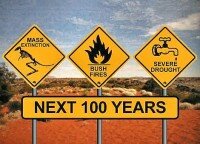
So climate change has claimed a political victim in Australia and you don’t know whether to laugh or cry…
read more »
Posted in Technology on 06/23/2009 08:26 am by Stephen Tindale
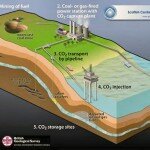
Coal has a very high carbon content, so is a major source of greenhouse gasses and the economic costs of polluting the atmosphere are not borne by the polluter, In economic jargon, ‘the externalities are not internalised’.
read more »
Posted in Policy, Technology on 08/23/2010 04:21 pm by

With around 95% of its electricity generated from coal, Poland comes up higher in coal statistics than Australia, the US, South Africa or even China. The coal intensity of electricity generation in Poland is not only a legacy from the past, but also a conscious choice of consecutive Polish governments. As the most abundant energy resource in the country, coal is considered an important pillar of Poland’s energy security. And yet, despite the central position of coal for the energy sector and the environmental pressure from Brussels, there is little enthusiasm for CCS technology among Polish decision-makers and energy sector stakeholders.
read more »
Posted in Comment, Policy on 04/22/2015 03:41 pm by Suzanna Hinson
The EU should not buy electricity from countries with highly-polluting coal power stations, and should instead support efficiency and clean energy in these countries.
read more »
- Tags: biomass, carbon capture, CCS, CHP, coal power, decarbonisation, energy efficiency, nuclear power, renewables, solar power, wind power
Posted in Comment, Policy on 02/23/2015 02:10 pm by Stephen Tindale
CER has now published my policy brief on ‘State aid and energy: climate action is more important than the single market’.
read more »
Posted in Policy on 04/07/2014 04:44 pm by Stephen Tindale
My comments to the European Commission, saying that it should approve the UK government’s application to sign a contract with EDF energy to build a new nuclear power station.
read more »
Posted in Comment on 08/29/2014 03:48 pm by Stephen Tindale

My article for the Responding to Climate Change website in which I argue that Polish prime minister Tusk would not be a bad choice as president of the European Council – despite his pro-coal position.
read more »
Posted in Policy on 04/17/2010 05:53 pm by Stephen Tindale

All three main UK parties take climate seriously and promise to reduce emissions and expand low-carbon energy. They all recognise the energy security and employment benefits. This article includes quotations from the relevant parts of the manifestos of the three main parties on heat and electricity – energy efficiency, fuel poverty and energy production.
read more »
Posted in Comment on 04/12/2014 05:54 am by Stephen Tindale
My CER blog on how Europe should reduce its dependence on Russian gas
read more »
Posted in Comment, Policy on 03/28/2015 07:30 pm by Stephen Tindale
Climate campaigners should be more pragmatic and more prepared to make compromises. Pragmatism often delivers progress; idealism rarely does.
read more »
Posted in Comment, Policy on 02/02/2015 04:11 pm by Stephen Tindale
The Centre for European Reform has now published my article on GMOs. This post explains why I am now giving a public opinion, having kept quiet for several years.
read more »
Posted in Policy on 06/01/2009 11:21 am by
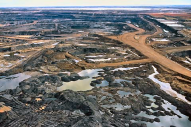
Climate change is a contentious topic in Canada, largely due to the nation’s long-standing ties to the fossil fuel industry. At the forefront of Canadian discourse on this topic is the Province of Alberta’s famous “dirty” tar sands oil production. This is followed closely by the coal-fired electricity industry. From a high-level perspective, these two well-established, carbon-intensive industries, combined with the provincial and federal governments’ reluctance to limit their emissions in a meaningful way, form the basis upon which Canada has historically failed to engage in climate change discussions and continues to fail to significantly address climate change.
read more »
Posted in Policy on 05/08/2014 09:29 am by Stephen Tindale
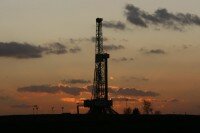
For climate and air quality reasons, we need more gas. Shale gas is less bad than liquified natural gas – and better than coal.
read more »
Posted in Policy on 07/31/2010 06:22 am by Stephen Tindale
The European Commission has proposed that subsidies to hard coal should be phased out by 2014. This is good, but must be agreed by EU national governments, some of whom will almost certainly try to extend the deadline.
read more »
Posted in Comment, Policy on 06/27/2016 08:02 am by Stephen Tindale
What will be the impact of Brexit on clean energy in the UK? Answer: nobody knows, because nothing is remotely clear in British politics now. Who will be prime minister? Will there be an early general election? What will be the relationship between the UK and the remaining EU member-states? Will there even be a […]
read more »
Posted in Comment, Policy on 02/20/2015 09:22 pm by Stephen Tindale
Outside the EU, the UK could theoretically become a new Norway, with very high environmental standards. Pigs could also fly.
read more »
Posted in Policy, Technology on 11/13/2009 10:49 am by Stephen Tindale

Yesterday (9 November 2008), the UK Energy and Climate Change Secretary, Ed Miliband, published National Policy Statements (NPS) outlining the government policy on energy. They consist of guidance to the new Infrastructure Planning Commission (IPC), which, from next March, is due to grant or refuse planning permission on major energy and transport infrastructure projects. The statements are area a mixed bag – good on renewables, nuclear and electricity networks, but less good on coal.
read more »
Posted in Comment on 05/11/2015 08:31 am by Stephen Tindale
Tory manifesto indicates no major change in energy policy, with exception of end to subsidy for onshore wind. But UK engagement with EU energy union looking less likely.
read more »